

Diagnosis of bruxism in Vigo
Understanding the origin of wear is the first step to protect your smile
In Clinica Torres we evaluate the signs of bruxism, bites, muscle and temporomandibular joint to identify the problem and design a custom plan that helps reduce discomfort and prevent future damage.
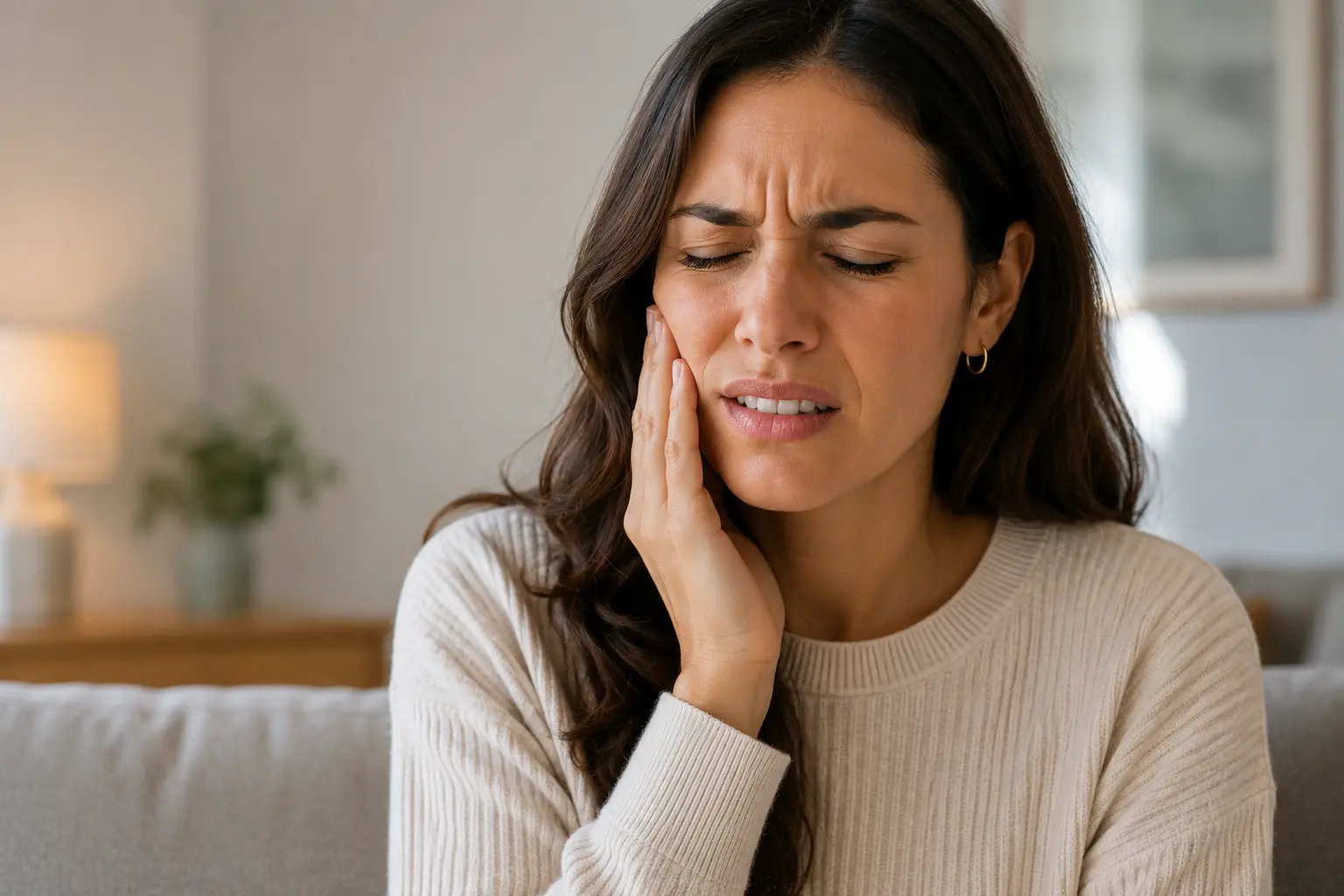
Characteristics of the diagnosis
of bruxism
The early diagnosis of bruxism guarantees the patient’s quality of life and prevents other periodontal problems from developing.
- Rapidity in diagnosis: It is important to detect bruxism early in order to correct this condition and its consequences in time.
- Health improvement: With the early diagnosis of bruxism and its subsequent treatment the patient will notice a great improvement at all levels.
- Prevention: With the treatment of bruxism it is possible to avoid major problems at the oral level such as tooth wear.
Diagnosis ofbruxism
Bruxism is the involuntary habit of squeezing or rubbing teeth without functional purposes. This may happen during the day or at night, but the one that is related to sleep is often the biggest problem, as it is more difficult to control.
During regular dental examinations, our dentists will check for signs of bruxism, so they will look for changes in the teeth and mouth during the next consultations to see if the process is progressive and to determine the type of treatment the patient needs.


Treatment ofbruxism
Depending on the diagnosis our experts will determine the type of treatment needed to correct this condition:
- FérulasDischarge:It is designed to keep the teeth separate to avoid damage caused by clamping or reclining the teeth.
- Orthodontics:If this condition is presented by a bad dental agent, it is necessary to have an Orthodontic treatment to create a dental balance and thus eliminate any trigger for bruxism.

EXPERTS IN SONRIES
Diagnosisearly
The early diagnosis of bruxism guarantees the patient’s quality of life.
The importance ofYour smile
In Clínica Torres we have more than 30 years of experience in dentistry. We have always developed new techniques in terms of the treatment of bruxism, ATM and poor occlusion.
We are responsible for a comprehensive study of the causes of bruxism in our patients, so that appropriate treatment can be applied according to the causes and their consequences. By making a personalized follow-up to adapt each treatment to the evolution of pathology.
In Clinica Torres we are characterized by the personalized treatment of each of our patients, always taking into account their needs and therefore each of our treatments are adapted to each person who goes to our clinic in search of the perfect smile.

Why choose Clínica Torres?
Greater precision. Greater confidence. Greater peace of mind.
We have developed a way of working based on digital planning, clinical specialisation and close support throughout every stage of treatment.
1. Specialised professionals
The medical team at Clínica Torres is made up of highly qualified professionals covering all areas of dentistry. Their extensive training and high level of specialisation are essential for providing modern, safe treatments based on scientific evidence.
2. Experience
With over 30 years of experience, Clínica Torres has continued to grow and evolve, incorporating the latest technologies and advances in dentistry.
3. Latest technology
At Clínica Torres, we use the latest technological advances to provide reliable diagnoses and deliver effective treatments.
4. Emergency dental care
We offer an emergency dental service to deal with unexpected situations, ensuring a fast and professional response when it is needed most.
5. Availability
We offer extended opening hours from 8:00 am to 9:30 pm, making it easier for our patients to access dental care without disrupting their daily routines.

Frequently asked questions
You may suspect bruxism if you notice jaw pain when you wake up, facial tension, headaches, tooth sensitivity, tooth wear, or if someone has told you that you clench or grind your teeth at night. However, the diagnosis should be confirmed through a clinical assessment.
No. Bruxism can occur during the night or during the day. Some people grind their teeth while sleeping, while others clench their jaw during the day, especially during periods of concentration, stress or tension.
Diagnosis usually includes a dental examination, assessment of tooth wear, evaluation of the bite, examination of the jaw muscles and assessment of the temporomandibular joint. In some cases, additional tests may be needed to complete the diagnosis.
Yes. Muscle tension caused by clenching or grinding the teeth can lead to discomfort in the jaw, temples, head, neck or even the upper back. For this reason, diagnosis should not focus only on the teeth, but also on the muscles and the joint.
If it is not controlled, bruxism can cause progressive tooth wear, fractures, sensitivity, muscle overload, jaw pain and problems with the temporomandibular joint. Early detection helps protect the teeth and reduce discomfort.
Not necessarily. A night guard may be recommended in many cases, but the cause and severity of the bruxism, the condition of the teeth, the bite and the symptoms must first be assessed. Treatment should be adapted to each patient.