

Dental bone graft in Vigo
Solution to safely place implants
The Dental bone graft in Vigo is a fundamental treatment in implantology when there is not enough bone to place dental implants with guarantees. In Dental Clinic Torres we do dental bone regeneration with advanced techniques and high quality materialsensuring the stability of the implant and long-term lasting results.
In Dental Clinic Torres we do dental bone regeneration with advanced techniques and high quality materialsensuring the stability of the implant and long-term lasting results.
Characteristics of the bone graft
It is the technique used to supply the loss of dental bone that is a oral problem that can have serious consequences for the person.
The bone graft has the following characteristics:
- Importance: It is important in such cases as may be necessary to ensure the correct attachment of the implant inside the maxillary.
- Biocompatible materials: All materials used to make the bone graft are biocompatible with the human organism.
- Indoloro treatment: Bone graft is performed using local anesthesia so the patient will not feel any pain during treatment.
What is a Bone graft dental?
The Dental bone graft is a procedure that allows to recover the lost bone volume in the maxilla or jaw. Its objective is to create a solid base on which to place implants dental. The bone is the support of the implant. Without a sufficient amount, it is not possible to ensure their stability and durability.
We have previously commented that bone graft is a frequent intervention in people who need to place an implant and do not have enough bone. It is essential, for the treatment to succeed, to ensure the correct attachment of the implant inside the maxillary. The implantologist must therefore take a first step before the titanium screw is placed. It is essential to ensure that the patient does not present this problem prior to intervention.
The implant is anchored in the maxillary bone, and if it is too thin, it is very likely that it will not be able to give the screw a solid and lasting bond. It is therefore ineffective to place an implant if the person does not have the required bone volume. This is when the dentist proceeds to the treatment of bone graft to gain surface vertically.


Why is the bone loss?
Although the main reason for this reduction in the maxillary is the lack of teeth, there are other factors that favour this problem.
The bone needs dental stimulation for its proper functioning.
- The presence of an advanced periodontal disease involves the presence of bacteria in the oral cavity. As time passes, the solidified jar reaches the root and the alveolar bone, causing its gradual loss.
- Receiving an impact on the teeth can not only cause the teeth to break. In the long run, it may harm the nerve – causing its calcification – and reduce the dental bone.
- Having certain pathologies such as diabetes or osteoporosis makes the person more likely to suffer from maxillary bone decrease.

EXPERTS IN SONRIES
Solutions for all kinds of smiles
An essential method to recover missing dental parts and to recover the smile completely.
We designed the smile ideal
In Clínica Torres we have more than 30 years of experience in dentistry. We are always in constant evolution to apply the latest advances in dental prostodontics.
We are aware that dental prostheses are an effective solution when our patients lack one or more dental parts. Our dental prostheses achieve and return guaranteed stability in order to achieve a harmony, balance and support of great functionality. A free space in the mouth causes the pressure of the bite to make greater forces on the other functional dental parts.
In Clinica Torres we are characterized by the personalized treatment of each of our patients, always taking into account their needs and therefore each of our treatments are adapted to each person who goes to our clinic in search of the perfect smile.

Why choose Clínica Torres?
Greater precision. Greater confidence. Greater peace of mind.
We have developed a way of working based on digital planning, clinical specialisation and close support throughout every stage of treatment.
1. Specialised professionals
The medical team at Clínica Torres is made up of highly qualified professionals covering all areas of dentistry. Their extensive training and high level of specialisation are essential for providing modern, safe treatments based on scientific evidence.
2. Experience
With over 30 years of experience, Clínica Torres has continued to grow and evolve, incorporating the latest technologies and advances in dentistry.
3. Latest technology
At Clínica Torres, we use the latest technological advances to provide reliable diagnoses and deliver effective treatments.
4. Emergency dental care
We offer an emergency dental service to deal with unexpected situations, ensuring a fast and professional response when it is needed most.
5. Availability
We offer extended opening hours from 8:00 am to 9:30 pm, making it easier for our patients to access dental care without disrupting their daily routines.

Frequently asked questions
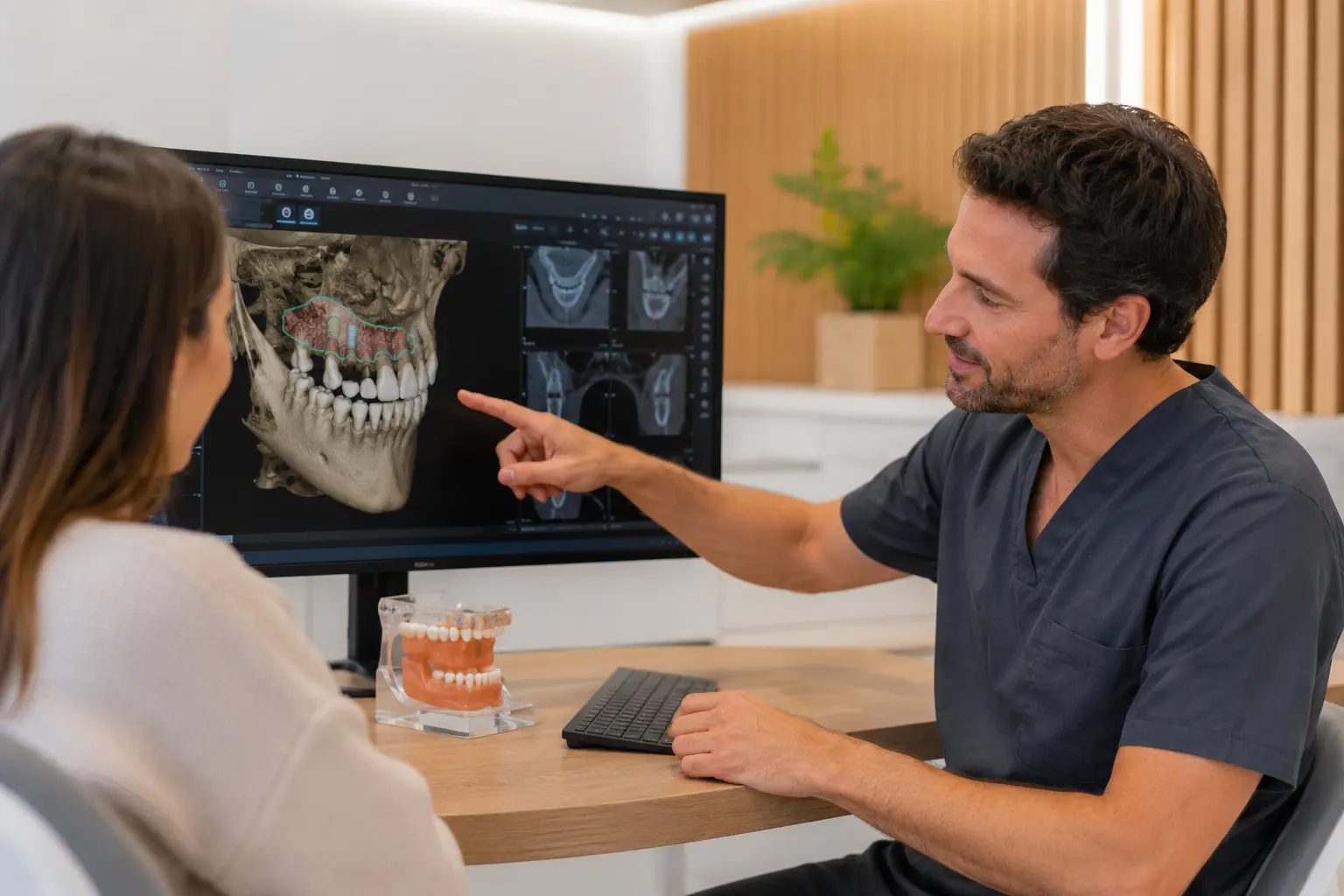
This is determined through a clinical assessment and imaging tests, usually a 3D dental CT scan. The study evaluates the height, width and quality of the available bone to determine whether it can support the implant securely or whether bone regeneration is needed beforehand.
Not always. In some cases, the graft is performed before placing the implant, while in others it can be carried out during the same procedure. It depends on the amount of available bone, the area being treated and the complexity of the case.
The integration time varies depending on the patient and the type of regeneration performed. In general, it may take several months before the bone is ready to safely receive the implant. After diagnosis, the clinical team can provide an approximate timeframe.
It is important to follow the clinic’s instructions, maintain careful oral hygiene, avoid strenuous activity during the first few days, refrain from smoking and attend the scheduled follow-up appointments. These measures help promote proper healing and more stable bone regeneration.
In many cases, yes. Lack of bone does not always prevent implant placement, but it may require bone regeneration techniques, bone grafting, sinus lift procedures or other advanced solutions. The key is to assess the case carefully before deciding on the treatment.
If there is not enough bone volume, the implant may not have a sufficiently stable foundation. This can compromise its integration, the long-term durability of the treatment and the functional or aesthetic result. When indicated, a bone graft helps create a more secure base for the implant.