
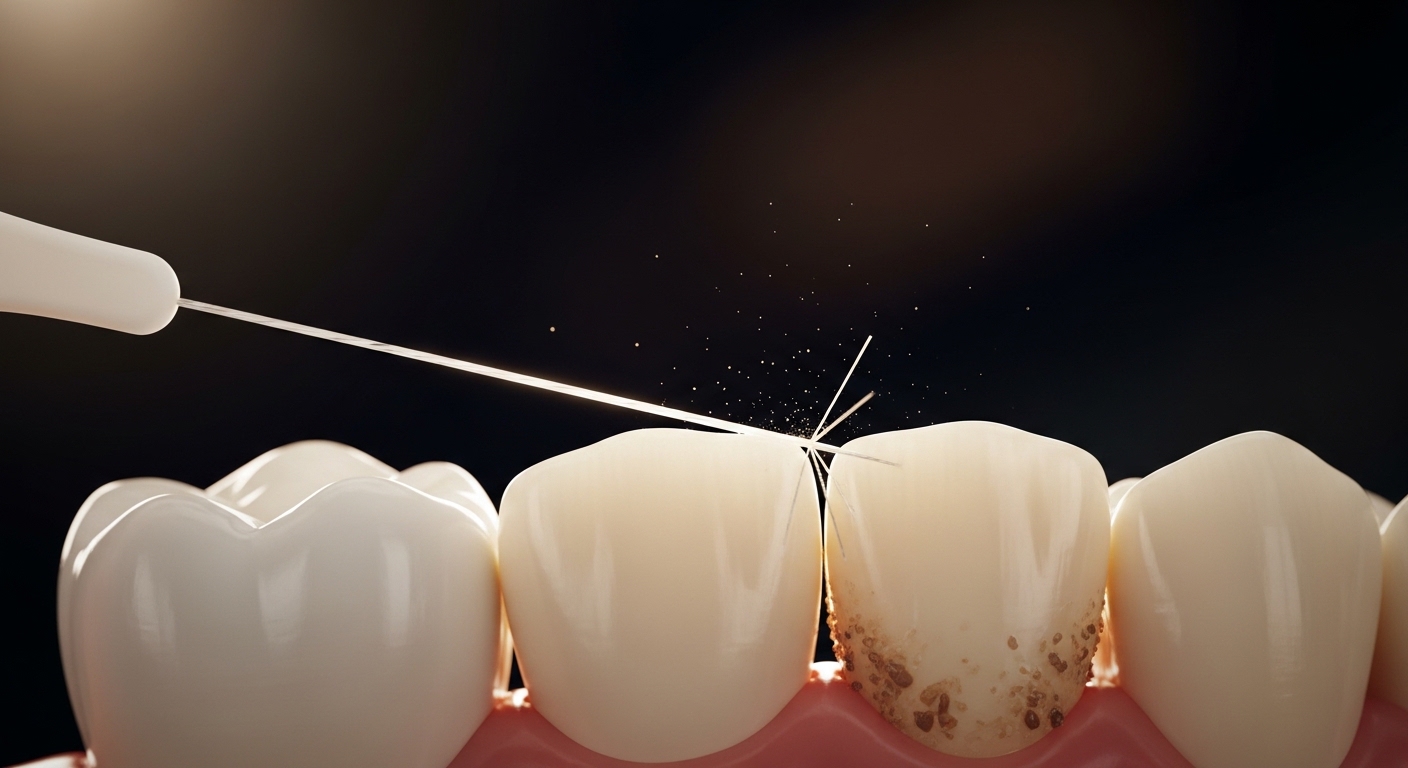
Oral health is based on a clear clinical principle: effectively controlling and removing bacterial plaque. Although toothbrushing is an essential tool, it is not sufficient on its own. There are areas of the mouth where a toothbrush cannot reach with precision, especially the spaces between teeth.
These interdental areas are where oral biofilm accumulates—a complex structure of bacteria that is the primary cause of most oral diseases. This is where dental floss plays a key role, becoming a fundamental element in any dental prevention protocol.
What is dental floss and what is its role in oral hygiene
Clinical definition of dental floss
Dental floss is a filament specifically designed to remove bacterial plaque and food debris accumulated between teeth and below the gumline.
What is oral biofilm and why it must be removed
Oral biofilm is an organized community of bacteria that adheres to the surface of teeth. This biofilm:
- Forms continuously after every meal
- Strongly adheres to dental surfaces
- Can mineralize and turn into tartar if not removed
When biofilm is not properly removed, it creates an environment that promotes the development of diseases such as tooth decay and gingivitis.
Why brushing alone is not enough
Mechanical limitations of the toothbrush
The toothbrush is designed to clean the visible surfaces of teeth, but it cannot fully penetrate interdental spaces. As a result, a significant portion of bacterial plaque remains.
Studies in the dental field estimate that brushing removes between 60% and 70% of plaque, leaving up to 30–40% in hard-to-reach areas.
Importance of interdental cleaning
Interdental cleaning targets the areas where oral disease begins. Without it, the risk of developing dental problems increases significantly.
Oral health problems prevented by flossing
Interdental cavities
Cavities that develop between teeth are often detected at advanced stages. Dental floss removes food debris and bacteria, reducing their occurrence.
Gingivitis
Gingivitis is inflammation of the gums caused by plaque buildup. It is reversible if treated early through proper interdental hygiene.
Periodontitis
If gingivitis is left untreated, it can progress to periodontitis, a disease that affects the bone supporting the teeth. Interdental cleaning is one of the main preventive tools.
Halitosis or bad breath
Bacteria accumulated in interdental spaces produce sulfur compounds responsible for bad breath. Flossing helps eliminate them.
How to properly use dental floss step by step
Recommended protocol
- Cut approximately 16–20 inches (40–50 cm) of floss
- Wrap it around the middle fingers of both hands
- Gently insert it between the teeth
- Curve it into a “C” shape around each tooth
- Use gentle vertical movements
- Use a clean section for each interdental space
Frequency of use
It is recommended to floss at least once a day, preferably before nighttime brushing.
Most common mistakes when using dental floss
- Not using it daily
- Applying too much force and damaging the gums
- Not cleaning all interdental spaces
- Reusing the same section of floss
- Stopping use due to initial bleeding
Bleeding when starting to floss usually indicates pre-existing inflammation. With consistent use, gums become healthier and bleeding stops.
Types of dental floss and which one to choose
- Waxed floss: easier to slide between teeth
- Unwaxed floss: greater plaque removal capacity
- Dental tape: recommended for wider spaces
- Super floss: ideal for orthodontics or implants
The choice of floss depends on dental anatomy and the specific needs of each patient.
Alternatives and complements to dental floss
Interdental brushes
Effective for wider interdental spaces or patients with periodontal disease. They allow deeper cleaning in certain cases.
Oral irrigators
Use a pressurized water stream to remove debris. They are a useful complement but do not fully replace dental floss.
Impact of flossing on long-term health
Regular flossing not only improves immediate oral health but also has cumulative long-term benefits:
- Significant reduction in cavity risk
- Prevention of gum disease
- Reduced need for complex treatments
- Better preservation of natural teeth
Additionally, scientific evidence has linked oral health with overall health, particularly in inflammatory conditions.
Relationship between oral health and overall health
The accumulation of bacteria in the mouth can impact the body. Clinical studies have linked periodontal disease to:
- Cardiovascular diseases
- Diabetes
- Pregnancy complications
Controlling oral biofilm through flossing helps reduce these risks.
Complete oral hygiene routine
- Flossing once a day
- Brushing teeth 2–3 times a day
- Using fluoride toothpaste
- Regular dental check-ups
Combining these habits helps maintain optimal oral health over time.
Conclusion: flossing as a cornerstone of dental prevention
The importance of flossing lies in its ability to target the most vulnerable areas of the mouth. Daily use removes plaque where the toothbrush cannot reach, preventing disease and improving oral health.
Incorporating flossing into your daily routine is not optional—it is a key component of modern preventive dentistry. Consistent use makes the difference between maintaining a healthy mouth and developing oral diseases over time.
Frequently asked questions about the importance of flossing (FAQs)
Yes, daily flossing removes interdental plaque and helps prevent disease.
No, both are complementary and necessary for complete oral hygiene.
The risk of interdental cavities, gingivitis, and periodontitis increases.
Flossing is the foundation. Water flossers are a complement.
Bleeding usually indicates existing inflammation. With consistent use, gum health improves.