
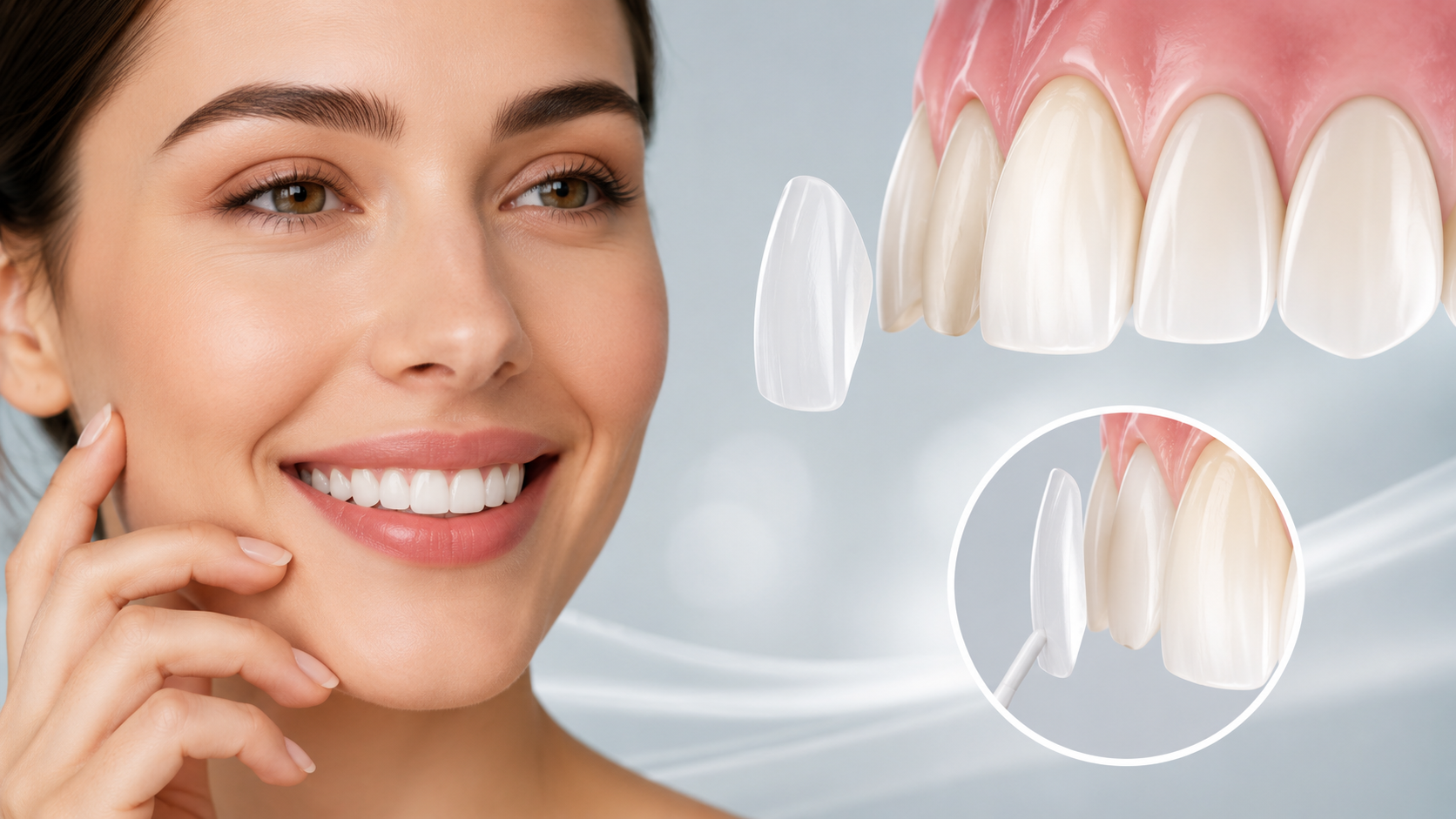
No-prep veneers represent one of the most significant advancements in modern cosmetic dentistry. The combination of digital technology, advanced ceramic materials, and highly precise bonding techniques now makes it possible to enhance many smiles without aggressively reshaping natural teeth.
For years, many people avoided dental veneers out of fear of losing healthy enamel or ending up with an artificial-looking smile. Today, minimally invasive dentistry aims for the exact opposite: preserving as much natural tooth structure as possible while achieving a harmonious, personalized, and long-lasting smile.
At Clínica Torres, specialists in dental veneers in Vigo, we work with advanced digital smile design protocols and high-quality ultra-thin veneers to deliver highly personalized treatments. The goal is not to create an artificial transformation, but to enhance each smile while respecting every patient’s facial and dental identity.
What are no-prep veneers?
No-prep veneers are ultra-thin ceramic or advanced porcelain shells bonded to the visible surface of the teeth to correct aesthetic concerns such as:
- Tooth discoloration.
- Gaps between teeth.
- Minor fractures.
- Mild wear.
- Dental asymmetries.
- Small or disproportionate teeth.
The main difference compared to traditional veneers is that, in many cases, they allow the dental enamel to remain intact or require only minimal preparation.
This approach belongs to what is known as conservative and minimally invasive dentistry, a clinical philosophy focused on preserving as much healthy tooth structure as possible.
It is important to understand that not every patient is a candidate for a completely no-prep treatment. Suitability depends on multiple clinical factors:
- Tooth position.
- Bite type.
- Existing tooth volume.
- Condition of the enamel.
- Functional habits.
- Desired aesthetic outcome.
For this reason, a personalized diagnosis is an essential part of the treatment process.
Why no-prep veneers are a revolution in cosmetic dentistry
Cosmetic dentistry has evolved dramatically in recent years. In the past, many treatments required significant tooth reduction to place conventional veneers. Today, technological advances allow for much more conservative treatments.
The revolution behind no-prep veneers is based on three key pillars:
- Preservation of natural enamel.
- Ultra-thin, high-strength materials.
- Highly precise digital smile design.
Dental enamel is a unique biological structure that cannot regenerate. Preserving as much enamel as possible improves veneer bonding and promotes greater long-term durability.
In addition, modern dental ceramics feature advanced optical properties capable of closely replicating the translucency, texture, and shine of natural teeth.
How ultra-thin no-prep veneers work
The treatment is based on extremely precise planning. Every smile is individually analyzed using advanced digital technology.
Diagnosis and digital analysis
The first step is to evaluate the patient’s smile through:
- Clinical photography.
- 3D intraoral scanning.
- Facial analysis.
- Bite analysis.
- Functional evaluation.
This allows us to understand how the teeth relate to the face and design a balanced, natural-looking smile.
Digital smile design
Thanks to Digital Smile Design, patients can preview an approximate simulation of the final result before beginning treatment.
This technology improves:
- Predictability.
- Clinical precision.
- Personalization.
- Communication between patient and specialist.
Custom fabrication
The veneers are individually crafted using high-quality ceramic materials. Essential parameters are customized, including:
- Color.
- Shape.
- Texture.
- Brightness.
- Translucency.
- Thickness.
This level of customization is essential for achieving a natural and virtually invisible result.
Veneer bonding
The veneers are bonded using advanced adhesive techniques specifically developed for dental enamel.
Proper bonding is one of the most important factors in ensuring:
- Durability.
- Strength.
- Aesthetic stability.
- Biological integration.
Differences between traditional veneers and no-prep veneers
Not all veneers follow the same clinical philosophy. There are significant differences between traditional treatments and today’s conservative approaches.
Traditional veneers
- Require more tooth reduction.
- Remove part of the natural enamel.
- May cause sensitivity in some patients.
- Aim for more dramatic cosmetic changes.
No-prep veneers
- Prioritize tooth preservation.
- Reduce invasiveness.
- Allow for more natural-looking results.
- Promote stronger enamel bonding.
- Improve aesthetic integration.
The current trend in modern dentistry is moving toward increasingly biological and conservative treatments.
When are no-prep veneers recommended?
Ultra-thin veneers can be an excellent solution for many clinical cases.
They are generally recommended for patients with:
- Small teeth.
- Mild spacing issues.
- Tooth discoloration.
- Minor fractures.
- Moderate wear.
- Mild asymmetries.
- Moderate aesthetic concerns.
However, they are not always the best option. In some situations, a different treatment may be more appropriate.
Cases where they may not be recommended
- Severe crowding.
- Significant bite problems.
- Untreated severe bruxism.
- Substantial enamel loss.
- Teeth that protrude significantly outward.
For this reason, a professional diagnosis is essential to ensure a safe and stable treatment.
Real benefits of no-prep veneers
The main advantage is the preservation of natural enamel. However, there are many additional clinical and aesthetic benefits.
- Less damage to the tooth.
- Excellent aesthetic integration.
- Natural-looking results.
- Reduced tooth sensitivity.
- Greater bonding stability.
- High strength and durability.
- Long-term performance.
- Minimally invasive treatment.
Clinical studies published in restorative dentistry show that properly planned ceramic veneers have very high long-term survival rates.
The importance of materials in dental veneers
Not all dental veneers provide the same results. The quality of the materials directly affects:
- Aesthetics.
- Strength.
- Durability.
- Color stability.
- Optical integration.
High-end ultra-thin veneers are typically made from:
- Feldspathic ceramic.
- Lithium disilicate.
- Next-generation reinforced ceramics.
These materials reproduce the optical behavior of natural enamel with extraordinary precision.
Risks of poorly planned veneer treatment
The success of dental veneers largely depends on the experience of the professional and the quality of the diagnosis.
An incorrectly planned treatment may cause:
- Artificial-looking results.
- Excessive tooth bulkiness.
- Bite problems.
- Gum inflammation.
- Veneer debonding.
- Unnecessary enamel removal.
For this reason, it is essential to choose specialized clinics that work with medical criteria, digital technology, and top-quality materials.
How to keep your veneers in perfect condition
Dental veneers require care similar to natural teeth.
- Brush properly after meals.
- Floss daily.
- Schedule regular dental cleanings.
- Attend professional check-ups.
- Avoid biting hard objects.
- Use a night guard if you grind your teeth.
Good oral hygiene is essential to keep both the veneers and gums healthy.
Why choose Clínica Torres for dental veneers in Vigo
High-quality cosmetic dentistry requires experience, precision, and a conservative clinical approach.
At Clínica Torres, we work with:
- Digital smile design.
- Advanced 3D technology.
- Premium materials.
- Minimally invasive protocols.
- Custom fabrication.
- Evidence-based dentistry.
Our goal is to create natural, harmonious, and long-lasting smiles while always preserving the patient’s dental health.
Every treatment is individually designed because we understand that every smile is unique.
Frequently asked questions about no-prep veneers
No. When properly indicated and performed, they preserve almost all of the natural enamel.
Yes. Modern ceramics offer excellent strength and stability when the treatment is properly planned.
In many cases, yes, although it depends on tooth position and the patient’s clinical characteristics.
Porcelain veneers provide better aesthetics, greater color stability, and superior durability.
With proper maintenance and high-quality materials, ceramic veneers can last for many years.
It is uncommon when proper adhesive protocols and high-quality materials are used.
Yes. Maintaining good oral hygiene and attending regular check-ups is essential.
In many cases, yes—especially when no significant enamel reduction has been performed.