
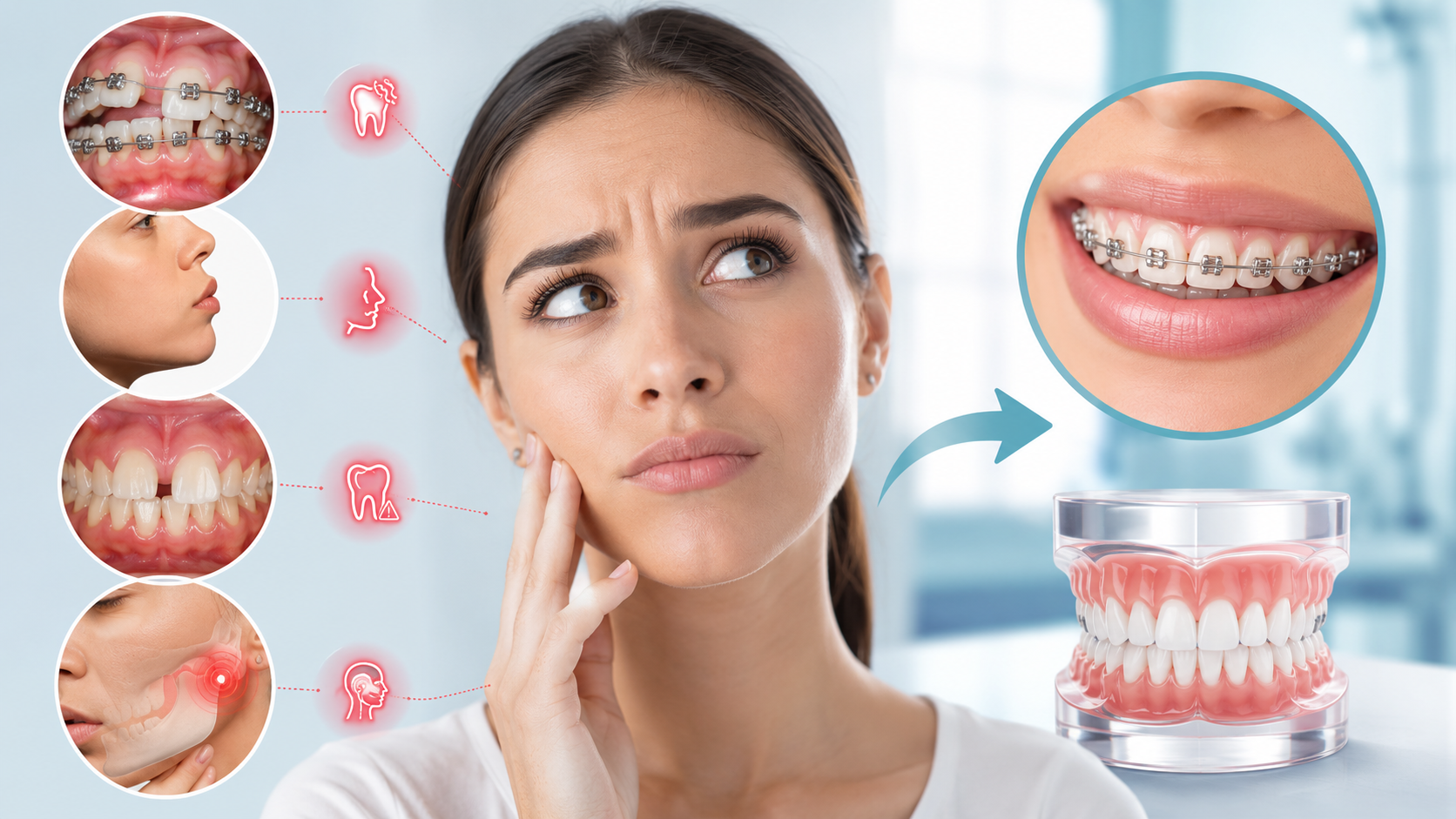
A poorly performed orthodontic treatment can affect much more than the appearance of your smile. High-quality orthodontic care should not only straighten teeth, but also achieve a stable bite, balanced chewing function, and proper harmony between teeth, gums, muscles, and the jaw joint.
When orthodontic treatment is not properly planned or carefully monitored, persistent discomfort, tooth wear, relapse, jaw pain, or difficulty chewing may occur. Identifying these signs early makes it possible to apply more conservative solutions and avoid more serious complications.
What Does Poorly Performed Orthodontic Treatment Mean?
Poorly performed orthodontic treatment is treatment that fails to achieve the right balance between esthetics, function, and stability. Teeth may appear aligned, but if the bite does not fit correctly, the treatment cannot be considered fully successful.
Malocclusion refers to an improper relationship between the upper and lower teeth when biting. If not corrected properly, it can lead to excessive pressure, muscle pain, tooth wear, and temporomandibular joint problems.
High-quality orthodontic treatment should aim for:
- Proper tooth alignment.
- A stable and functional bite.
- Healthy gums and periodontal tissues.
- No excessive pressure on teeth.
- Long-term stability.
- Appropriate retention after treatment.
How to Know If Orthodontic Treatment Was Done Incorrectly
Not every discomfort during orthodontic treatment is a sign of a problem. Feeling pressure or mild discomfort after adjustments or aligner changes is common. However, some symptoms should not persist over time.
Persistent Pain and Functional Discomfort
Mild pain during tooth movement can be normal. What is not normal is continuous pain while chewing, constant jaw tension, or discomfort that does not improve over time.
- Pain when closing the mouth.
- Excessive pressure on certain teeth.
- Frequent muscle discomfort.
- Persistent tooth sensitivity.
Problems Chewing or Closing the Mouth
A common sign of a poor bite after orthodontic treatment is feeling that the teeth do not fit together naturally. Some patients notice that one side touches before the other or that the jaw searches for a comfortable position without finding it.
Tooth Wear and Sensitivity
When the bite is not balanced, certain teeth absorb more force than they should. This can lead to premature enamel wear, small fractures, or tooth sensitivity.
Jaw Clicking and Muscle Tension
The TMJ, or temporomandibular joint, connects the jaw to the skull. An unstable bite may contribute to jaw clicking, locking, pain near the ear, or tension in the neck and jaw muscles.
Most Common Problems After Poor Orthodontic Treatment
Problems after poorly performed orthodontics can be esthetic, functional, or periodontal. The most important step is identifying the real cause before starting any correction.
- Residual malocclusion: teeth look aligned visually, but the bite does not function properly.
- Orthodontic relapse: teeth shift again after treatment ends.
- Tooth wear: caused by incorrect tooth contact.
- Gum problems: gum recession or inflammation may appear if tooth movement was not properly controlled.
- Jaw pain: related to muscle or joint overload.
- Worsened bruxism: an unbalanced bite can increase dental tension and grinding.
Why Orthodontic Treatment Can Go Wrong
Orthodontic treatment can fail for many reasons. The most common is an incomplete diagnosis. Before moving teeth, it is essential to evaluate the bite, bone structure, gum health, jaw joint, and functional goals of the treatment.
Problems can also occur when only dental esthetics are prioritized without analyzing how the teeth fit together during chewing. A smile that appears aligned may still be unstable if function has not been properly addressed.
The most common causes include:
- Insufficient initial diagnosis.
- Lack of digital treatment planning.
- Failure to evaluate the TMJ.
- Failure to monitor periodontal health.
- Excessive tooth movement.
- Inadequate or improperly used retainers.
- Lack of follow-up after treatment ends.
The Importance of a Comprehensive Orthodontic Diagnosis
Modern orthodontic treatment should begin with a complete evaluation. A comprehensive diagnosis helps identify risks before tooth movement begins and allows for a more stable treatment plan.
An advanced evaluation should analyze:
- Tooth position.
- Bite type.
- Gum health.
- Bone quality.
- Temporomandibular joint condition.
- Habits such as bruxism or mouth breathing.
- The need for long-term retention.
Digital technology, such as intraoral scanning and 3D planning, helps predict tooth movement, control treatment timing, and improve precision.
How to Correct Poorly Performed Orthodontic Treatment
In many cases, poorly performed orthodontic treatment can be corrected. The first step is not immediately starting another treatment, but obtaining a specialized second opinion to understand what went wrong.
Specialized Second Opinion
A second opinion allows the orthodontist to analyze the bite, tooth wear, periodontal condition, and stability of the results achieved. This evaluation helps determine whether the problem is esthetic, functional, or both.
Treatment Replanning
Once the cause has been identified, a new treatment plan is created. Replanning may include selective tooth movement, bite adjustments, periodontal management, or bruxism treatment.
Corrective Orthodontics and Aligners
Corrective orthodontics can reposition teeth and improve the bite after previous treatment. In some cases, clear aligners may be used; in others, braces or combined techniques may be necessary.
Functional Rehabilitation and Stability
When tooth wear, bite issues, or joint problems are present, orthodontic treatment may need to be combined with restorative procedures or occlusal splints.
When to Take Action and Why You Should Not Wait
Waiting too long may allow the problem to worsen. An incorrect bite can lead to cumulative tooth wear, increased muscle tension, gum inflammation, or relapses that become harder to correct.
You should seek evaluation if you experience:
- Pain while chewing.
- An uncomfortable bite.
- Teeth shifting after orthodontic treatment.
- Jaw clicking.
- Visible tooth wear.
- Retainers that no longer fit properly.
What Modern High-Quality Orthodontics Should Include
High-quality orthodontics should combine esthetics, health, and function. It is not only about moving teeth, but also about achieving a stable smile and a comfortable bite.
- Comprehensive diagnosis.
- Digital treatment planning.
- Bite control.
- Regular clinical follow-up.
- Periodontal evaluation.
- Customized retention.
- A multidisciplinary approach when necessary.
Why Choose a Specialized Orthodontic Clinic in Vigo
At Clínica Torres, we work with an approach based on accurate diagnosis, digital planning, and high-quality personalized treatments. Every case is studied individually to achieve orthodontic results that are functional, esthetic, and stable.
Clinical experience, advanced technology, and continuous follow-up are essential for correcting problems after previous orthodontic treatment and preventing future relapse.
Frequently Asked Questions About Orthodontic Problems and Solutions (FAQs)
Signs may include an uncomfortable bite, persistent pain, tooth wear, jaw clicking, or teeth shifting again after treatment.
Temporary discomfort can be normal, but constant pain while chewing or closing the mouth requires professional evaluation.
Yes. In many cases, it can be corrected with corrective orthodontics, aligners, functional adjustments, or combined treatments.
Yes. An unbalanced bite can cause muscle overload and discomfort in the temporomandibular joint.
This may be orthodontic relapse. The bite and retention system should be evaluated.
Yes, in some cases. It depends on the complexity of the problem and the functional condition of the bite.
It depends on the case. Minor corrections may take only a few months, while complex cases require more time.
It should be evaluated by an orthodontist experienced in functional diagnosis, bite analysis, stability, and digital treatment planning.