
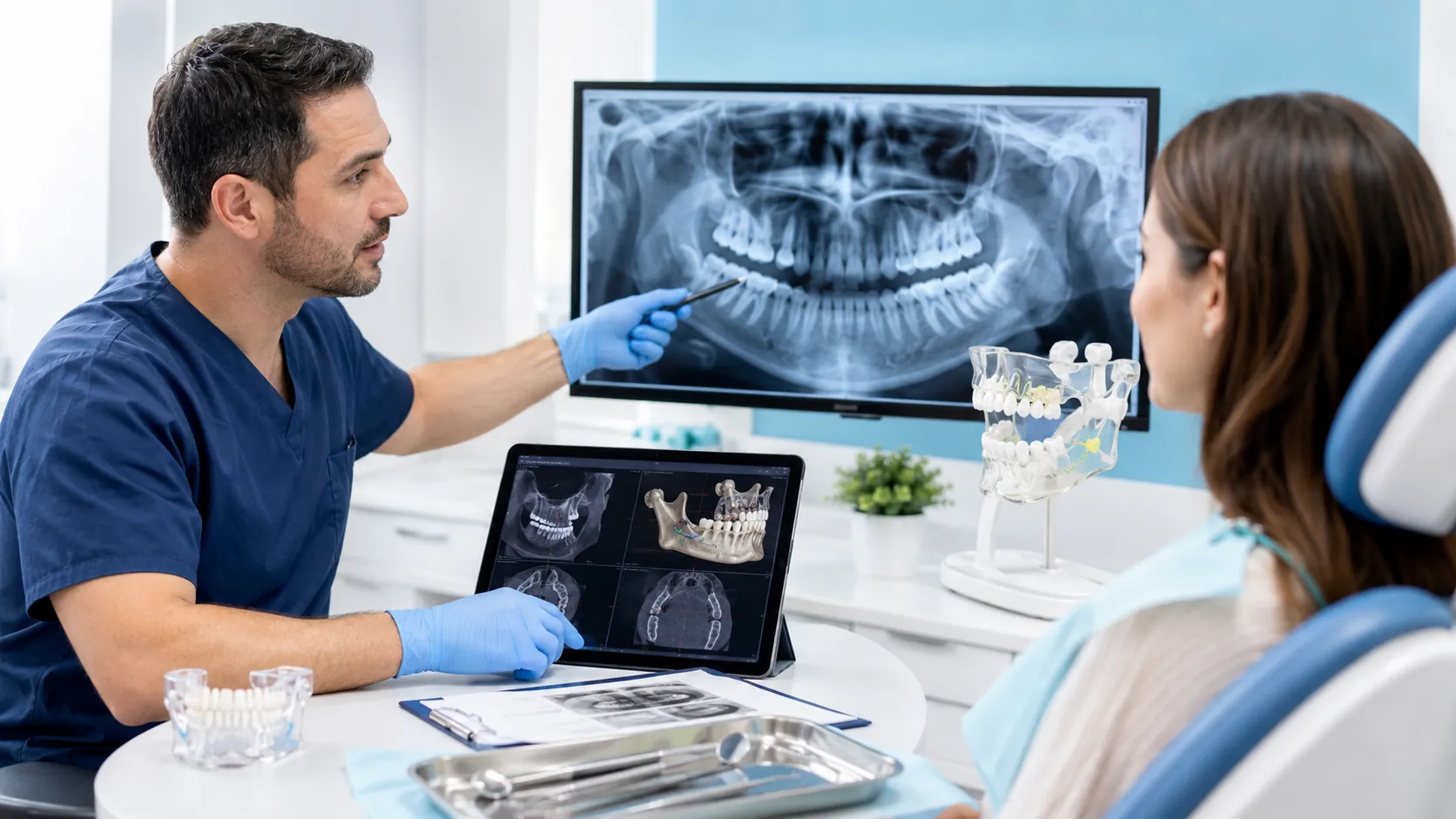
Oral surgery treatments address conditions involving the teeth, gums, bone, and other oral tissues when a problem cannot be resolved through conservative techniques alone. They include complex extractions, wisdom tooth surgery, apicoectomies, dental implants, bone regeneration, and biopsies.
Before performing surgery, it is essential to identify the cause, determine whether the tooth can be preserved, and compare the available alternatives. At Clínica Dental Torres, we approach oral surgery in Vigo through individualized diagnosis, digital planning, and postoperative follow-up.
What is oral surgery and when can it help?
Oral surgery is the area of dentistry that uses surgical procedures to treat certain conditions affecting the teeth, roots, gums, jawbone, and soft tissues.
It is not the same as all forms of oral and maxillofacial surgery. Facial trauma, major jaw abnormalities, and certain complex lesions may require hospital care or referral to a specialist.
Oral surgery may be considered when a tooth cannot be restored, an infection persists, a tooth is impacted, there is insufficient bone for an implant, or a lesion needs to be analyzed. None of these findings automatically means that surgery is required.
How oral surgery is diagnosed and planned
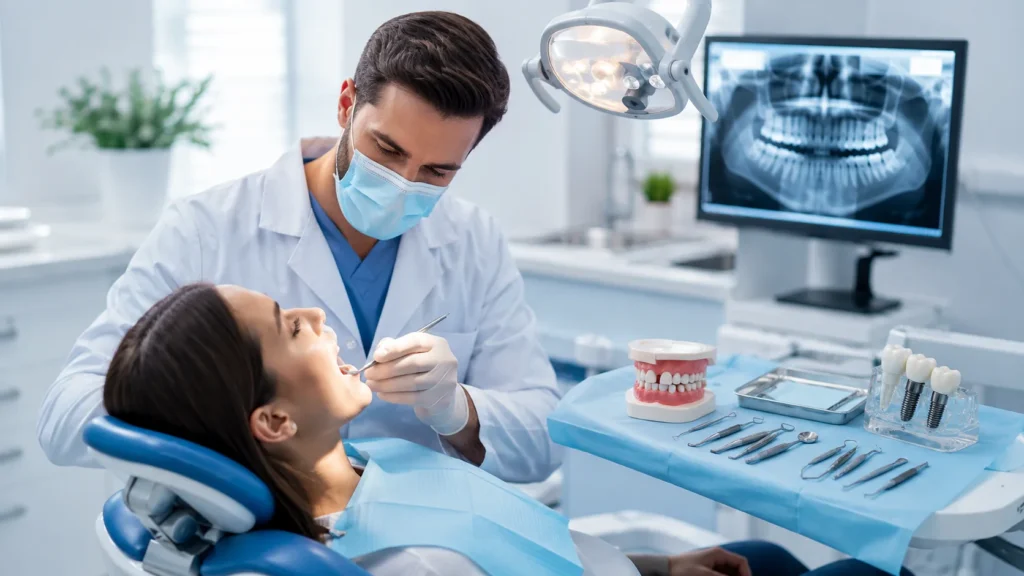
Planning begins with a review of the patient’s medical history, medications, allergies, and a complete examination. X-rays are used to evaluate the teeth, roots, and bone. In selected cases, a CBCT scan provides three-dimensional information about nerves, the maxillary sinuses, or available bone volume.
- Identify the problem and determine its extent.
- Assess whether the tooth can be preserved.
- Compare surgical and nonsurgical alternatives.
- Define the technique, anesthesia, risks, and follow-up care.
Not every procedure requires 3D imaging. The test should be justified by the information needed for diagnosis and treatment planning.
Complex extractions and wisdom teeth
A surgical extraction may be necessary when a tooth is fractured below the gumline, has complex roots, remains impacted, or cannot be removed through a conventional extraction.
Wisdom teeth are evaluated when they cause repeated infections, cavities, periodontal damage, injury to a neighboring tooth, or associated lesions. If they remain healthy and do not cause problems, clinical and radiographic monitoring may be recommended.
When a lower wisdom tooth is close to a nerve, a more detailed study may be necessary. In selected cases, a coronectomy may be considered. This procedure removes the crown of the tooth while leaving the roots in place.
Impacted teeth and apicoectomy
An impacted tooth remains within the gum or bone instead of erupting normally. For some impacted canine teeth, surgical exposure may be performed to allow orthodontic traction. Extraction is generally reserved for teeth with an unfavorable position or prognosis.
An apicoectomy treats certain persistent areas of infection at the tip of a tooth root. The affected tissue is removed along with a small portion of the root. Before proceeding, root canal retreatment, surgery, and extraction should all be compared.
Dental implants, bone grafts, and sinus lifts
A dental implant is an artificial root placed in the bone to support a crown or dental prosthesis. Its position should be planned according to the final restoration, the bite, the gums, and the amount of available bone.
When there is insufficient bone volume, a bone graft or guided bone regeneration may be considered either before implant placement or during the same procedure.
In the back of the upper jaw, the maxillary sinus may limit the available bone height. A sinus lift creates space for bone regeneration in selected cases. None of these techniques is necessary for every patient.
Cysts, biopsies, and gum surgery
An oral biopsy involves taking a tissue sample for microscopic analysis. It may be recommended when a lesion cannot be diagnosed with certainty through a clinical examination alone.
Odontogenic cysts may require removal and radiographic follow-up. Extensive or suspicious lesions should be referred when their diagnosis or treatment falls outside the scope of the dental clinic.
Periodontal surgery may be considered when deep pockets or specific defects remain after the infection has been controlled and initial gum treatment has been completed.
What happens during oral surgery step by step?
- Consultation: review of symptoms, medical history, and clinical examination.
- Diagnosis: diagnostic tests and evaluation of treatment alternatives.
- Planning: selection of the technique, anesthesia, risks, and recovery protocol.
- Procedure: treatment of the affected area according to the plan.
- Postoperative care: instructions, medication, and follow-up appointment.
Most outpatient procedures are performed under local anesthesia. Conscious sedation may be considered for patients with anxiety or for longer procedures, but it requires a prior evaluation.
Recovery after oral surgery
Recovery depends on the procedure and the individual patient. Swelling, sensitivity, bruising, or mild bleeding may occur during the first few days. After wisdom tooth surgery, swelling may increase during the first 48 to 72 hours before beginning to decrease.
- Take all prescribed medication as directed.
- Avoid forceful rinsing during the first few hours.
- Maintain oral hygiene without injuring the surgical site.
- Choose soft, warm foods.
- Avoid smoking, alcohol, and intense exercise.
The clinic should be contacted if there is persistent bleeding, fever, worsening pain, increasing swelling, difficulty breathing, or changes in sensation.
How to choose the right treatment
- Can the tooth be preserved?
- Is there a nonsurgical alternative?
- Which anatomical structures need to be protected?
- Which procedure offers a reasonable prognosis?
- What follow-up care will the patient need?
Advanced oral surgery does not mean using the most complex technique. It means selecting the appropriate procedure and carefully monitoring the patient’s progress.
Why choose Clínica Dental Torres for oral surgery in Vigo?
At Clínica Dental Torres, we have more than 30 years of experience in dentistry and coordinate oral surgery, implant dentistry, periodontics, endodontics, and orthodontics.
- Personalized diagnosis and 3D planning when indicated.
- Guided surgery and conscious sedation in suitable cases.
- Clear information about alternatives and risks.
- Follow-up throughout the recovery process.
- Financing options subject to applicable terms.
Request an oral surgery evaluation in Vigo to find out which treatment may be appropriate for your situation.
Frequently asked questions about oral surgery treatments (FAQs)
Not always. Antibiotics should only be taken when prescribed by the professional based on the infection, the procedure, and the patient’s individual risk.
In many cases, yes, but the medication must be reviewed beforehand. It should never be stopped without medical guidance.
It depends on the type of suture. Some stitches dissolve on their own, while others are removed during a follow-up appointment.
An implant may be placed immediately or at a later date depending on the bone, infection, stability, and treatment plan.
Clínica Dental Torres offers financing options subject to evaluation and current terms.
Diagnosis and planning to protect your oral health
Oral surgery treatments should always begin with an accurate diagnosis, a justified recommendation, and appropriate follow-up care.
At Clínica Dental Torres, we combine experience, technology, and personalized care to preserve oral health, restore function, and support patients throughout the entire treatment process.